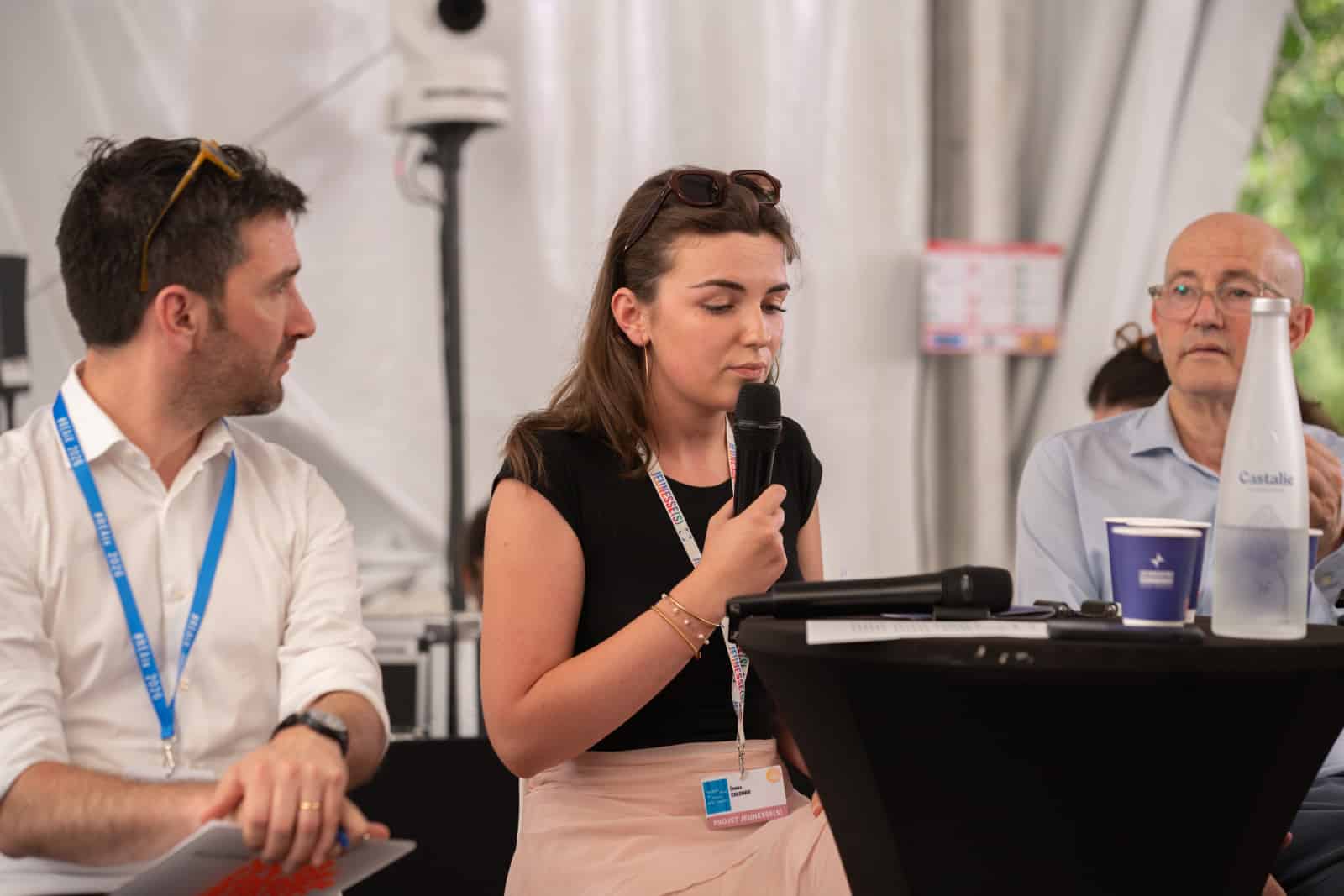



La Gen Z face aux violences du monde
Résumé
According to the ELABE study, 29% of young people feel constantly lonely, and one third experience mental health issues. This reflects a complex and overlapping crisis affecting every level of society: political, economic, geopolitical, digital, and environmental. In a world marked by violence, where the multiplication of contemporary challenges and social tensions requires complex and nuanced responses, are the models inherited from previous generations still suited to the needs and aspirations of today’s youth?
Generation Z is growing up under the weight of persistent social dogmas: the pressure to constantly perform and pursue material success disconnected from planetary emergencies. This discomfort is intensified by media outlets often perceived as corrupt or biased, prioritizing profit and sensationalism over honest reporting on current crises. Faced with this obvious disconnect from political and institutional elites, the feeling of institutional betrayal fuels deep anxiety, while also becoming the driving force behind a radical systemic re-evaluation.
Far from falling into passivity, young people are activating concrete forms of action within their reach. Engagement is expressed through mass demonstrations, but also through everyday acts of resistance. By placing mental health at the center of public debate, they are transforming their vulnerability into a genuine political force. The objective is no longer to follow in the footsteps of the past, but to reshape existing structures in order to build a future where human well-being takes precedence over productivity, through the restoration of authentic social connection.
Intervenants



Modérateur

Photothèque