


Managing Complexity in Highly Coupled First-of-a-Kind Megaprojects: the case of ITER
Environnement & Ressources
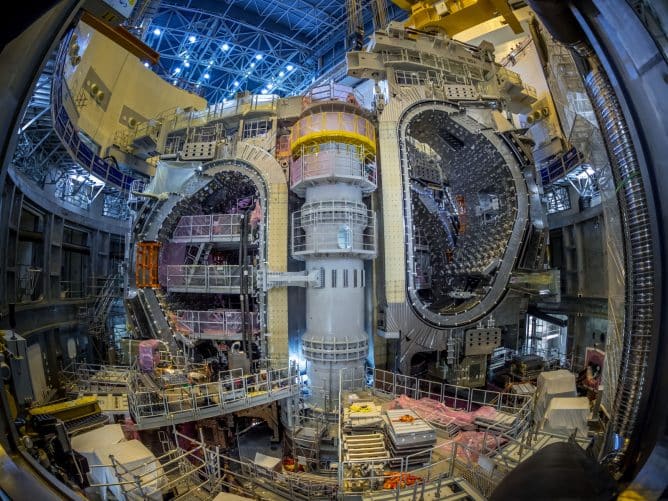
Managing a first-of-a-kind megaproject is fundamentally different from managing a conventional industrial project. The challenge is not only one of scale, but of complexity. In highly coupled systems, technical, organizational, and schedule interactions create behaviors that are often counterintuitive. ITER, the world’s largest fusion energy project, provides a powerful illustration of these dynamics.
ITER’s Turnaround: The Importance of Interfaces and Margins
For many years, ITER struggled to achieve the level of performance expected of a project of its importance. Prior to 2023, schedule performance remained weak, with a Schedule Performance Index (SPI) of approximately 0.6. Since then, a significant turnaround has been achieved. The project now operates at an SPI above 1.0, and the earned value generated in 2025 exceeded by more than a factor of two that achieved in any year before 2023.
While many factors contributed to this recovery, one lesson stands above all others: in highly coupled first-of-a-kind projects, the management of interfaces and margins is every bit as important as technical excellence.
ITER is characterized by an extraordinary number of interfaces. These interfaces may be geometrical, where physical components must fit together with extreme precision, or functional, where the performance of one system depends on several others. Importantly, these interfaces are rarely one-to-one. They are many-to-many. A change in one subsystem can affect numerous others, which in turn propagate consequences throughout the project.
This interconnectedness creates a particular vulnerability. During the conceptual phase of ambitious projects, there is a natural tendency to optimize designs aggressively. Space is minimized, tolerances are tightened, and margins are reduced in pursuit of performance, cost, or schedule objectives. The result is often a system that resembles a perfectly assembled jigsaw puzzle: every piece fits precisely, but no room remains for deviation.
The Fragility of Over-Optimization
Such optimization may appear efficient on paper, but it often creates fragility. First-of-a-kind systems inevitably encounter surprises. Suppliers discover that manufacturing is more difficult than anticipated. Components exhibit non-conformities. Regulatory requirements evolve. Technical assumptions prove incomplete.
These are not signs of failure; they are normal features of innovation. Yet when no margin exists around individual systems, even a small deviation can trigger redesigns and cascading impacts across multiple interfaces.
For this reason, margins should not be viewed as inefficiencies. They are investments in resilience. The more novel a system is, the greater the uncertainty it carries, and therefore the greater the margin it requires. Additional space, performance reserve, manufacturing tolerance, or schedule contingency may appear costly during design. In reality, such costs are often negligible compared with the consequences of late-stage redesigns, disrupted interfaces, and project-wide knock-on effects.
The same principle applies to schedules. There is a widespread belief among stakeholders and decision-makers that imposing the most aggressive possible schedule will produce the shortest overall project duration. Experience suggests the opposite. Schedules with little or no contingency quickly become disconnected from reality when faced with the inevitable uncertainties of a first-of-a-kind endeavor.
This is particularly true during assembly and integration, where activities on site become tightly coupled to deliveries from a complex global supply chain. A single delayed component can affect multiple downstream activities. A schedule with no slack amplifies such disruptions rather than absorbing them.
The Psychological and Behavioral Impact of Pressure
Excessive schedule pressure also creates undesirable behavioral effects. Teams may become reluctant to report problems promptly. Non-conformities may be tolerated in the hope of avoiding delays. Quality concerns may receive insufficient attention. Such decisions may appear beneficial in the short term but ultimately lead to costly rework, additional delays, and in extreme cases even project failure.
There is also an important psychological dimension. Once a project becomes significantly delayed or over budget, people may begin to perceive recovery as impossible. The distinction between being late and being very late appears insignificant. Motivation declines, accountability weakens, and a culture of resignation can emerge. Performance then deteriorates further regardless of the technical resources available.
Striking the Right Balance Through Competence and Trust
The solution is not to maximize margins indiscriminately. Excessive contingency can be as harmful as insufficient contingency. If margins are too large, organizations risk complacency and lose their sense of urgency. Effective project management therefore requires careful calibration. Margins must be sufficient to absorb realistic uncertainty while remaining tight enough to maintain focus and discipline.
Achieving this balance requires two ingredients above all others: technical competence and trust.
- Technical competence allows leaders to assess uncertainty realistically and allocate margins where they are truly needed. It enables risk-based decision-making rather than optimism-based planning.
- Trust allows information to flow honestly through the organization. Problems can then be identified early, discussed openly, and addressed collaboratively. Transparency strengthens confidence among project teams, partners, and stakeholders while reducing unnecessary bureaucracy.
The experience of ITER demonstrates that success in highly coupled megaprojects is not achieved by eliminating uncertainty. That is impossible. Success comes from recognizing uncertainty, designing for it, and managing it intelligently. Well-chosen technical and schedule margins are not signs of weakness; they are essential tools for controlling complexity. Combined with strong technical leadership and a culture of honesty and transparency, they provide the foundation upon which even the most ambitious first-of-a-kind projects can succeed.